The Technologies of the Awakened Mind collection
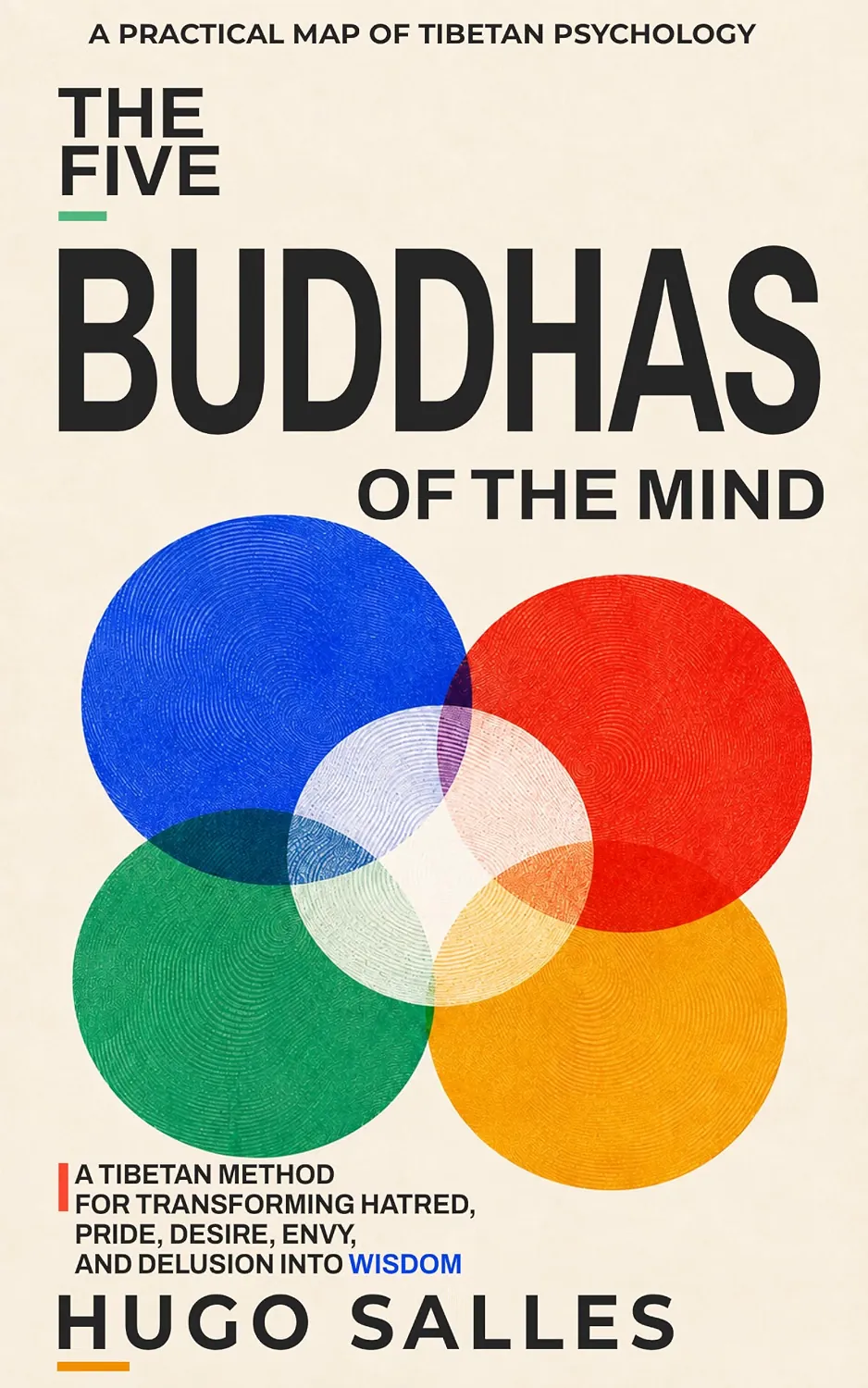
The Five Buddhas of the Mind
A Tibetan method for transforming hatred, pride, desire, envy, and delusion into wisdom.
“A masterclass in emotional alchemy for the modern skeptic.”
About the book
Stop trying to “fix” yourself. What if your anger, envy and anxiety are not flaws, but energy in the wrong place?
We learned to fight our bad emotions: repress them, cut them off, or pretend they don’t exist. But what if the Tibetan masters were right, and the poison and the medicine are made of exactly the same material?
In The Five Buddhas of the Mind, Hugo Salles hands you a psychological map tested for a thousand years. Blending neuroscience, a transformative trip to Japan and the Vajrayana tradition, he shows that you don’t need to destroy your shadows. You only need to reorganize them.
This is not a book about becoming a saint. It is a manual of emotional alchemy, with “pocket protocols” you can use in traffic, in line, or at 3 a.m. when the tabs in your head won’t close.
You don’t need a new personality. You only need to stop seeing so little. Open the map. The rooms are already yours.
The map
Five poisons. Five wisdoms.
The poison and the medicine are made of the same material. Tap a color to see what it becomes and which book in the series goes deeper.
East · Akshobhya
Chronic angerUnshakable clarity
Anger distorts everything it touches. The same energy, reorganized, becomes clarity: seeing the situation exactly as it is, adding nothing. The tradition calls it mirror-like wisdom.
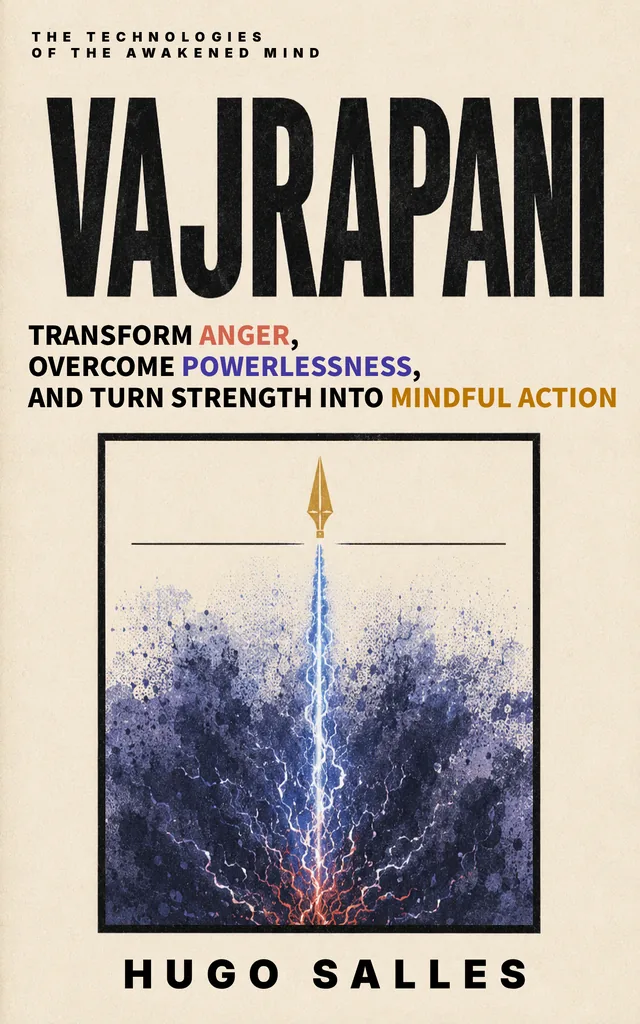
 VajrapaniAnger
West · Amitabha
The treadmill of desireDiscernment
Desire that never satisfies keeps promising the next thing will be enough. Reorganized, it becomes fine attention: seeing the worth of each thing and each person without needing to own it.
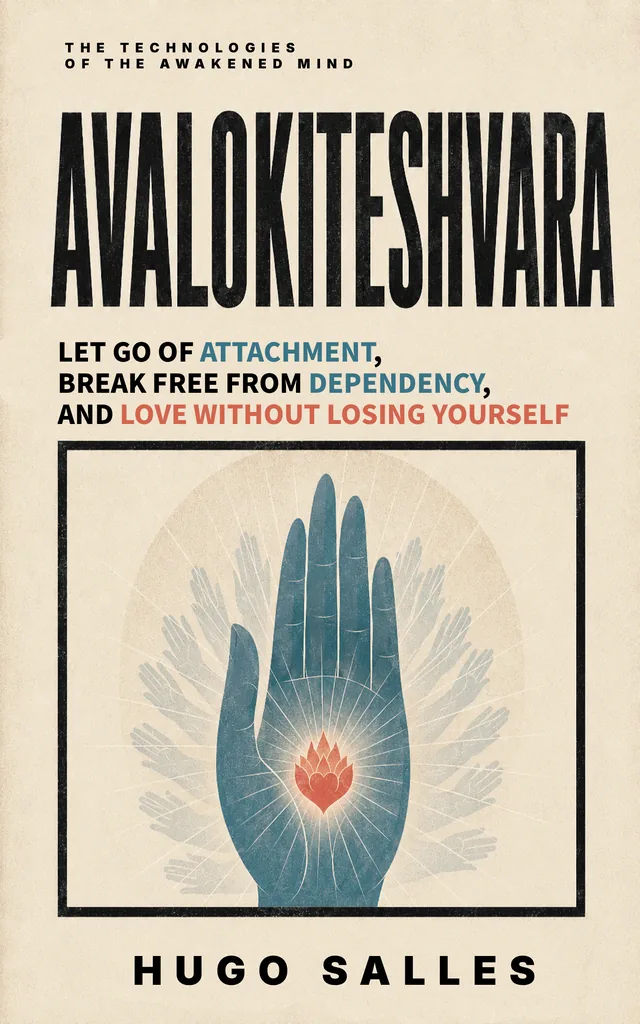
 AvalokiteshvaraAttachment
North · Amoghasiddhi
EnvyFearless action
Envy freezes you while you stare at someone else’s life. The same energy, hijacked, becomes action: doing what is within your reach without waiting for fear to pass.
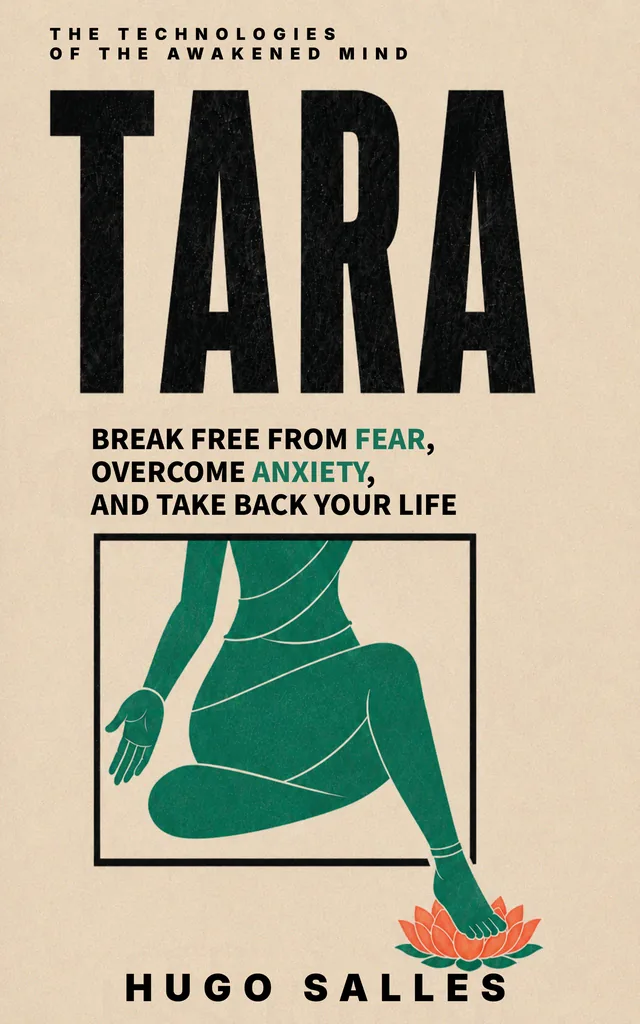
 TaraFear
South · Ratnasambhava
Imposter syndromeRadical dignity
Pride, imposter syndrome and guilt use the same ruler: they measure your worth, up or down. Guilt is that ruler turned against yourself. The way out is a dignity that depends neither on beating anyone nor on punishing yourself: the same worth in you and in others.
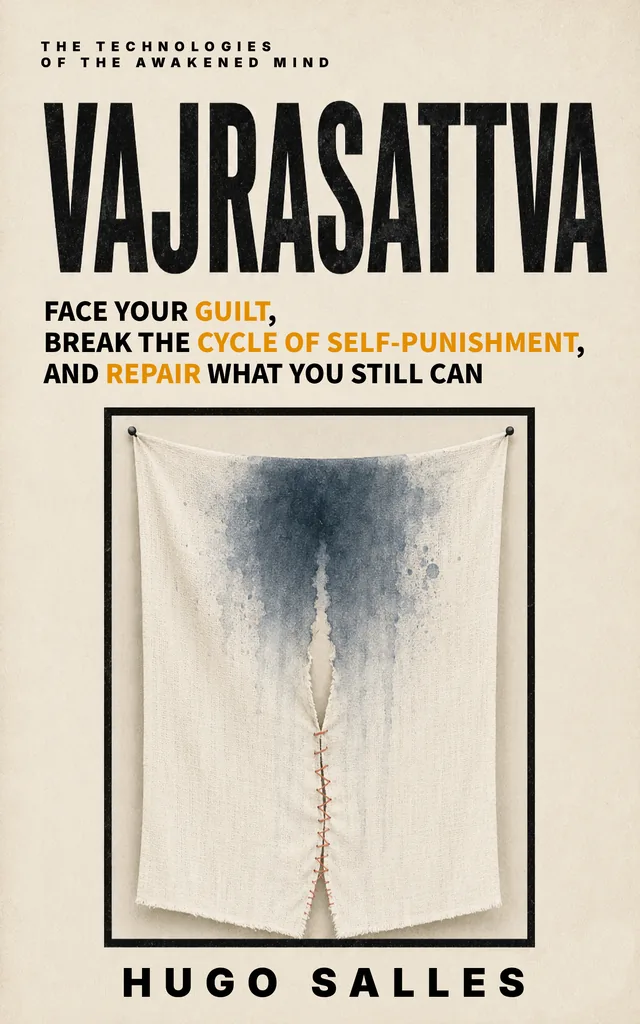
 VajrasattvaGuilt
Center · Vairocana
Tunnel visionAn expanded reality
Confusion is the mind seeing very little and calling it reality. At the center of the map, the task is not to think harder. It is to widen the field until the whole fits.
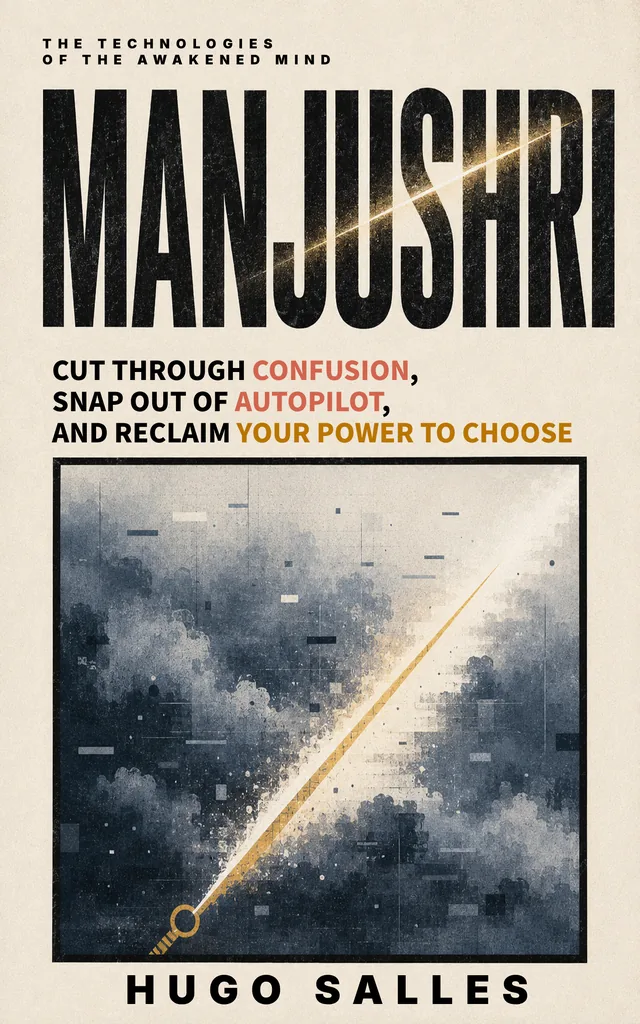
 ManjushriConfusion
Use the arrow keys to move through the five colors.
Book details
- Formats
- Kindle eBook and paperback, on Amazon
- Author
- Hugo Salles
- Publisher
- Mente Desperta
Who this book is for
- Skeptics and overthinkers tired of spiritual advice that sounds beautiful but changes nothing on an ordinary Tuesday
- Anyone living with chronic anger, imposter syndrome, envy, or the feeling that nothing is ever enough
- Readers who want to start the series and don’t know which book comes first
- Readers who finished one volume and want to see the whole map
- Anyone who wants concrete practice, with no faith required at the entrance
What you will find
- East: turn chronic anger into unshakable clarity
- South: heal imposter syndrome with radical dignity
- West: step off the treadmill of desire that never satisfies
- North: hijack envy and turn it into fearless action
- Center: break tunnel vision and expand your reality
- Pocket protocols to use in the middle of the day, not only on the cushion
Where the map came from
The turning point came during a trip to Japan. Inside a temple in Kyoto, Hugo encountered a statue of the Buddha Amida looking over his own shoulder: a Buddha who interrupts his path to paradise because he noticed someone was left behind.
That image, combined with a cheesecake eaten on a train to Hiroshima, eventually led him to the map of the Five Buddhas, and to the realization that it wasn’t a map of the sky. It was a map of his own mind.
Frequently asked questions
Do I need to read the series first?
No. The Five Buddhas of the Mind is the overall map: it stands on its own and is the best starting point if you haven’t read any book in the series.
Which book in the series should I start with?
This one. It shows the five afflictions together, and each book in the series goes deeper into one of them: Vajrapani (anger), Vajrasattva (guilt), Avalokiteshvara (attachment), Tara (fear) and Manjushri (confusion).
Do I need to be Buddhist?
No. The book treats Tibetan contemplative methods as technologies of the mind: no faith required at the entrance, just curiosity and honest practice.
When is it out, and in which languages?
It launches on December 15, 2026 as a Kindle eBook, in English and Portuguese. It is already available for pre-order on Amazon: reserve it now and it arrives on your Kindle on launch day.
Open the map
Available for pre-order on Amazon, in English and Portuguese. It arrives on your Kindle on December 15.