Glossary · Buddhist Philosophy & Practice
Tara (Noble Tara)
Tara (Sanskrit: तारा, Tārā; Tibetan: སྒྲོལ་མ, Drolma, 'She Who Liberates') is a central figure of Mahayana and Vajrayana Buddhist philosophy. In this tradition she stands for one thing above all: compassion that acts fast, before fear has time to freeze you.
A name that means rescue
The Sanskrit root tṛ means to cross over, to carry across. Tara is the one who ferries a mind from the near bank of panic to the far bank of steady action. The Tibetan name Drolma says the same thing in fewer syllables: she who frees. Read the name first and half the teaching is already there. She is not there to soothe you. She is there to get you moving.
The twenty-one Taras
Tradition lists twenty-one forms of Tara, each answering a different flavor of fear. Green Tara is the one most people meet first: leaning forward, one foot already off the lotus, caught mid-step toward whatever is wrong. White Tara sits still and works the opposite front, the slow fears about health and time. The colors and postures work as a map of how differently dread shows up in a life, and of how each kind wants its own response. The set of twenty-one is laid out in the classical Praise in Twenty-One Homages to Tara (Sanskrit Namastāraikaviṃśatistotra), preserved in the Kangyur; the detailed forms and attributes follow the Sūryagupta line of commentary.
Why she is read as a technology of mind
In this series Tara is not someone to petition. She is a shape the mind can take on purpose. Fear narrows attention and stalls the body; it makes the world shrink to the size of the threat. The figure of Tara holds the antidote in one image: eyes open to the danger, weight already shifting toward it, no gap between seeing and moving. Bring that image up when your chest tightens and it does what a slogan cannot. It hands the reaction a form to copy.
From image to practice
The practical move is small. Catch the moment fear arrives. Instead of arguing with it, picture the forward step, then take a real one, however minor: send the message, make the call, cross the room. Courage here has nothing to do with feeling calm. It lives in the half-second when you act while still afraid, and that half-second can be trained like any other skill. Tara is the reminder of where it is. Do it once and the next time is easier. Do it enough and the forward step starts to feel like the normal one.
Recommended book to go deeper
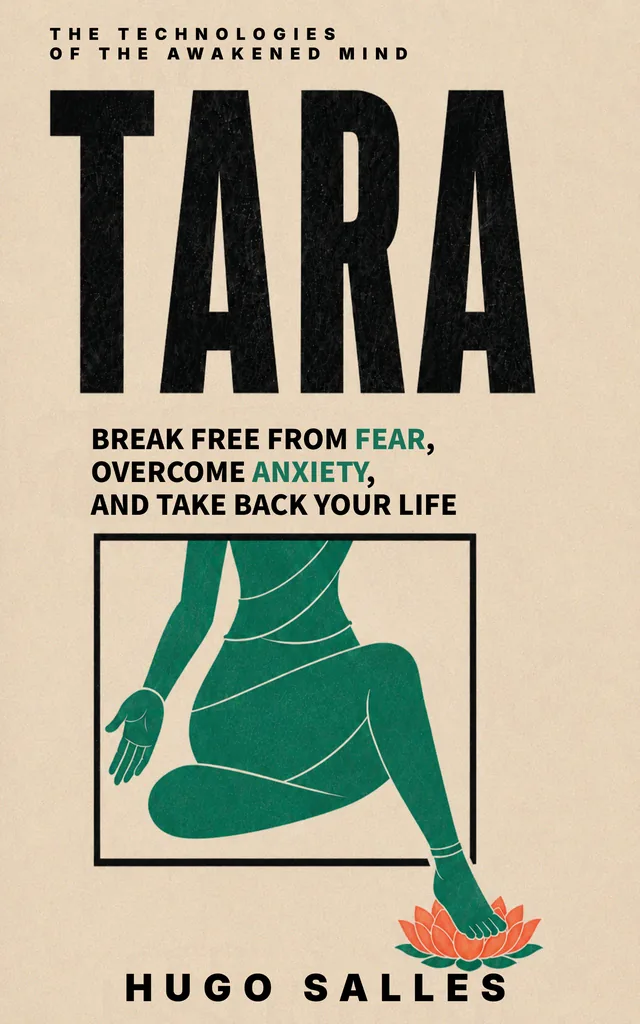
Tara
The living practice for real life — the Tibetan method for dissolving fear and crossing through anxiety with courage.