Topic · The Technologies of the Awakened Mind
Guilt and Self-Punishment
Guilt is useful for about a minute. After that it stops repairing anything and starts feeding on you. This is the pattern the Vajrasattva teaching in Tibetan Buddhist philosophy is built to interrupt.
The trap: paying instead of changing
Guilt runs on a quiet, broken logic. If I suffer enough over what I did, the suffering must count for something. So we punish ourselves and file it under responsibility. But the past does not read your mood. Feeling terrible for a week repairs nothing that a five-minute apology and a changed habit would not repair better. Self-punishment poses as the price of putting things right while quietly taking its place, and the mistake stays exactly where it was.
What actually clears a mistake
Tibetan Buddhist philosophy answers guilt with a structure often called the four opponent powers: facing what happened without flinching, honest regret, a concrete decision not to repeat it, and an act that moves in the opposite direction. Notice what the list leaves out. There is no clause about hating yourself. Regret and self-hatred can feel identical from the inside, yet only one of them points anywhere useful. The four powers are the standard formulation of the Tibetan graduated path — set out, among other places, in Tsongkhapa's Great Treatise on the Stages of the Path (Lamrim Chenmo) — and the confession they rest on goes back to the Sutra of the Three Heaps.
Why Vajrasattva
Vajrasattva is the figure this series uses for that clearing. The traditional image is a body of light, a mantra, a sense of something being washed clean. Stripped to its working core, it is a rehearsed way of setting a mistake down once you have taken the lesson from it, so the mind stops circling the same event at three in the morning. None of it depends on believing in a figure in the sky. The purification is carried out with the hundred-syllable mantra of Vajrasattva, recited within those same four powers, a practice standard across the Vajrayana traditions. Vajrasattva represents the moment the loop finally lets go.
A short practice for a heavy day
Name the thing you did in one plain sentence, with no softening and no drama. Feel the regret without stretching it into a life sentence. Decide the single thing you will do differently. Then carry out one small act that leans the other way: the message, the repair, the honest word you have been avoiding. When the guilt comes back that evening, and it will, answer it with the same four steps instead of replaying the crime frame by frame. Over a few days the charge drains out, and what is left is just the memory, which you can live with.
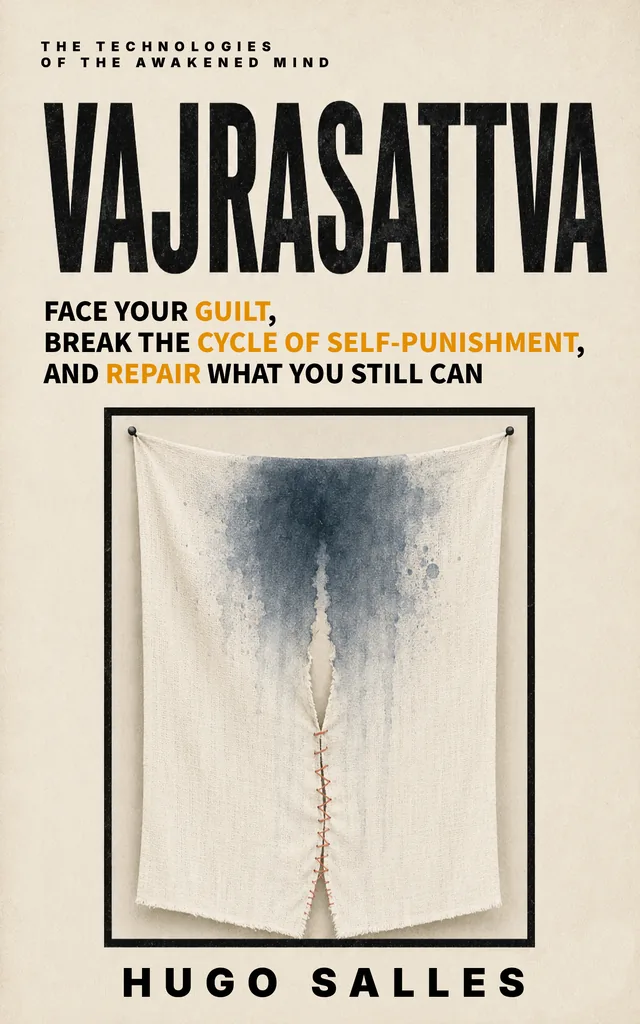
Recommended book to go deeper
Vajrasattva
The crystal that purifies — the Tibetan method to free yourself from guilt without denying the mistake.